
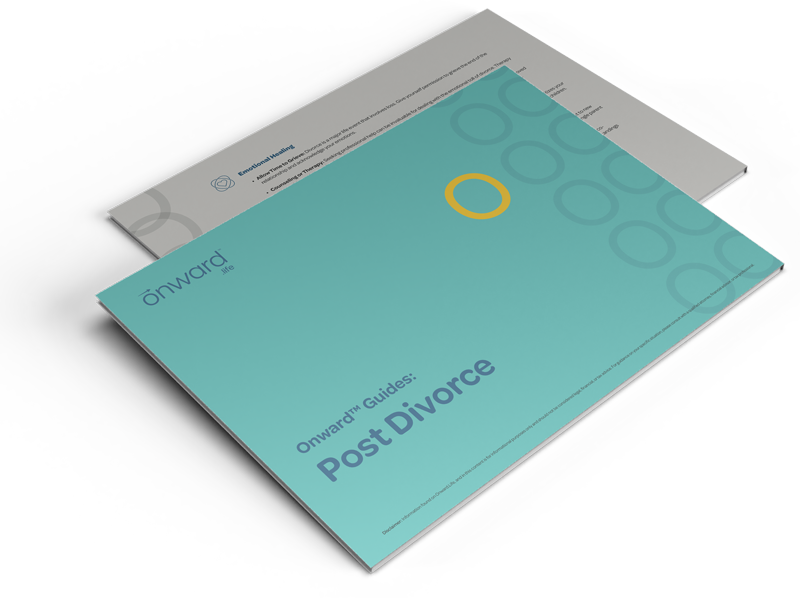
Post Divorce
Thriving and managing your life after divorce.

Onward provides:
- Personalized Task Management
- Sophisticated Budgeting Tools (Coming Soon)
- Post-Divorce Resource Center
- Wellness & Emotional Content
- Onward Experts & AI-powered Assistance
- Access to Support Groups & Community
Post Divorce Topics


Pricing & Features
Post Divorce
- Custom, detailed instructions for all divorce settlement obligations
- Personalized plan for establishing independence
- Expert advice from Onward specialists
- Secure document storage
- Full access to Onward content library
- Emotional wellness guidance
- Community forums
$20
/ month
Frequently Asked Questions
What should I do immediately after my divorce is finalized?
Take care of these essential administrative and personal tasks:
Legal & Financial Updates:
- Update your will and estate planning documents
- Change beneficiary designations on life insurance and retirement accounts
- Update titles and deeds on property per the divorce decree
- Revise your driver’s license, passport, and other ID (if name changed)
- Separate bank accounts and credit cards
- Update healthcare and insurance policies
- Notify your employer of status change
Personal & Emotional Tasks:
- Review your divorce decree carefully to understand all obligations
- Create a new budget reflecting your single-person finances
- Establish new routines and schedules (especially with children)
- Give yourself permission to process emotions
- Consider working with a therapist for post-divorce adjustment
Ongoing Responsibilities:
- Set up systems to track support payments or other obligations
- Update emergency contacts and beneficiaries on all accounts
- Begin rebuilding your credit if needed
Taking these steps methodically helps you establish your new independent life while ensuring legal and financial matters are properly handled.
How do I create a budget as a newly single person?
Follow these steps to establish a realistic post-divorce budget:
- Calculate Your Income:
- Monthly salary or wages (after taxes)
- Child support received
- Spousal support/alimony received
- Any other regular income sources
- List Fixed Expenses:
- Housing (rent/mortgage, property taxes, insurance)
- Utilities (electric, gas, water, internet)
- Insurance (health, auto, life)
- Car payments and transportation costs
- Minimum debt payments
- Track Variable Expenses:
- Groceries and household supplies
- Gas and transportation
- Entertainment and dining out
- Personal care and clothing
- Child-related expenses
- Plan for Irregular Costs:
- Car maintenance and repairs
- Medical expenses and prescriptions
- Annual fees and subscriptions
- Holiday and gift expenses
- Adjust and Monitor:
- Compare total income to expenses
- Identify areas to reduce spending if needed
- Build an emergency fund (3-6 months of expenses)
- Use budgeting apps or spreadsheets to track spending
- Adjust monthly as you learn your new financial reality
The first few months will help you understand your actual spending patterns as a single person, so expect to refine your budget over time. Onward provides its users a financial companion to help you understand and manage your budget.
How do I establish healthy co-parenting boundaries?
Effective co-parenting boundaries include:
Communication Guidelines:
- Keep all communication focused on the children only
- Use business-like methods (email, text, or co-parenting apps)
- Respond within reasonable timeframes (24-48 hours for non-emergencies)
- Avoid emotional discussions or personal topics
Respect Parenting Time:
- Honor the other parent’s time and decisions during their parenting time
- Don’t call or text excessively during the other parent’s time
- Stick to agreed-upon schedules unless both parties agree to changes
- Be clear about pickup and drop-off procedures
Protect Your Children:
- Never use children as messengers between parents
- Avoid negative talk about the other parent in front of children
- Don’t interrogate children about the other parent’s life
- Support your children’s relationship with their other parent
Maintain Consistency:
- Try to align on major rules where reasonable (bedtimes, homework expectations)
- Share important information about children’s health, education, and activities
- Present a united front on significant decisions
Remember that co-parenting is a business relationship focused on your children’s wellbeing, not a personal friendship with your ex-spouse.
How do I handle introducing children to a new partner?
Wait until the relationship is serious and stable. Experts typically recommend waiting at least 6 months to a year. Inform your co-parent before the introduction as a courtesy. Start with brief, casual meetings in neutral settings. Avoid forcing relationships or expecting children to be immediately comfortable. Don’t introduce multiple partners to children. Let the relationship develop naturally without pressure. Discuss with your co-parent how to handle new partners in parenting situations. Be prepared for children to have mixed emotions including loyalty conflicts, fear of change, or anger. Maintain your one-on-one time with your children so they don’t feel replaced.
Is it normal to still feel grief after divorce is final?
Absolutely. Even if you initiated the divorce or felt relief, grief is a normal response to the end of a significant relationship and life chapter. You may grieve the loss of your imagined future, your identity as a married person, shared routines and traditions, and the family structure you had. Grief isn’t linear, you may experience waves of sadness, anger, relief, and hope at different times. Give yourself permission to feel these emotions without judgment. Grief after divorce can take months or even years to process fully, and everyone’s timeline is different.
How do I rebuild my identity after divorce?
Divorce often requires rediscovering who you are outside of your marriage. Start by reconnecting with interests and hobbies you may have set aside. Invest in friendships and social connections. Set new personal goals unrelated to relationships. Try new experiences; take a class, join a group, or pursue something you’ve always wanted to do. Reflect on lessons learned and how you’ve grown. Consider therapy to work through identity questions. Avoid jumping immediately into a new serious relationship before understanding what you want. Remember that rebuilding identity is a process, not a destination.
When is it okay to start dating after divorce?
There’s no universal timeline. The right timing depends on your emotional readiness, not a specific number of months. Consider whether you’ve processed the end of your marriage, can discuss your divorce without intense anger or sadness, understand your role in the relationship ending, have established stability in other life areas, are dating because you want to (not to avoid loneliness), and can be emotionally available to another person. Many therapists suggest waiting at least six months to a year, but some people need more time while others may be ready sooner, especially if they emotionally divorced long before the legal process.
How do I help my children adjust to post-divorce life?
Maintain consistency and routines as much as possible across both households. Keep communication open and age-appropriate about changes. Reassure children the divorce wasn’t their fault and both parents still love them. Avoid putting children in the middle of adult issues or bad-mouthing the other parent. Watch for signs of distress including behavior changes, sleep problems, or academic struggles. Consider counseling for children to help them process emotions. Celebrate new traditions while honoring important old ones. Give children time to adjust – this is a process, not an immediate transition. Focus on creating a stable, loving environment rather than overcompensating with material things.