
Contemplating Divorce
Even the thought can be overwhelming.
While every relationship – and every divorce – is unique to the individuals involved, there are some prevalent reasons for divorce across couples. We can help you explore the common causes and accompanying signs to consider in your own marriage.

Onward provides:
- Relationship Guidance
- Decision-Making Tools
- Financial & Legal Prep
- Inspirational & Reflective Content
- Wellness & Emotional Advice
- Access to Support Groups & Community

Pricing & Features
Most Popular
Essential
Everything you’ll likely need to guide you
- Personalized assistance through entire divorce journey.
- Tools to streamline financial disclosure requirements
- Expert advice from Onward Specialists
- Secure document storage
- Full access to Onward content library
- Community forums
- Emotional wellness guidance
Free
Premium
Everything in Essential, plus add'l tools for more complex cases
- Assistance with completion & filing of required state forms
- Parsing of uploaded financial statements and forms
- Budgeting Tools
- Settlement Simulation
- Co-Parenting Calendar
- Expense reimbursement submission and tracking
$150
/ month
Collaboration
Everything in Premium for you and your spouse, lawyer, or financial advisor

$250
/ month
Post Divorce
- Custom, detailed instructions for all divorce settlement obligations
- Personalized plan for establishing independence
- Expert advice from Onward specialists
- Secure document storage
- Full access to Onward content library
- Emotional wellness guidance
- Community forums
$20
/ month
Frequently Asked Questions
How do I know if divorce is the right decision for me?
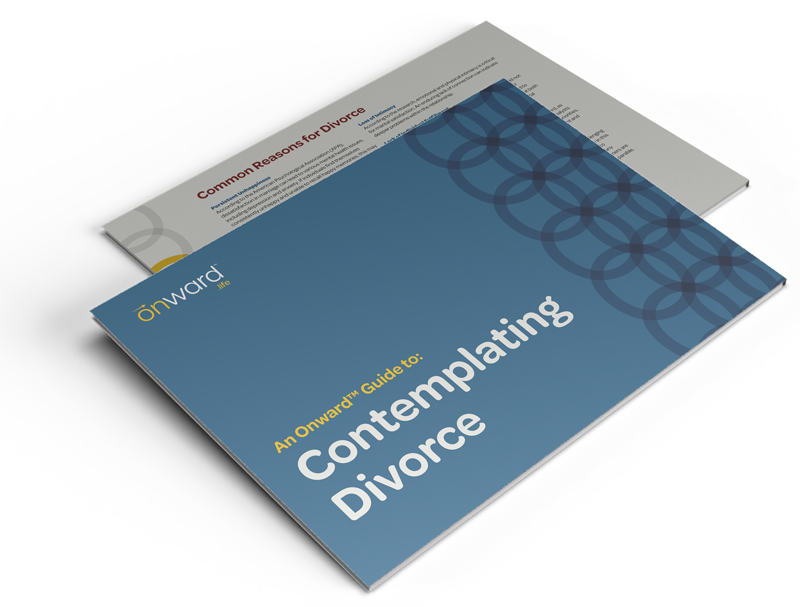
Deciding whether to divorce is deeply personal and requires honest self-reflection. Consider asking yourself key questions across several areas: Are you truly happy in your marriage? Do you feel emotionally safe with your partner? How do your relationship dynamics function, including communication patterns and trust? What would your future look like if you stay versus if you leave? Are practical concerns like finances or fear of being alone keeping you in the marriage? Reflecting on these questions can help you gain clarity about your feelings and your path forward. Onward provides a Guide for Contemplating Divorce that helps walk you through these questions.
What are the most common reasons couples get divorced?
Common reasons for divorce include persistent unhappiness, communication breakdowns, infidelity or betrayal, growing apart over time, financial strain and disagreements, lack of intimacy or emotional connection, unresolved conflicts that escalate, substance abuse or addiction issues, and domestic abuse or safety concerns. While every relationship is unique, recognizing these patterns in your own marriage can help you assess your situation more clearly.
Should I stay together for the kids?
This is one of the most difficult questions parents face. Consider whether your children are witnessing ongoing conflict, tension, or unhappiness, which can be more harmful than divorce itself. Children often benefit more from two healthy, separate households than from one unhappy home filled with conflict. However, the impact depends greatly on how divorce is handled, including maintaining stability, supporting children emotionally, and establishing effective co-parenting. If you’re staying solely because of the children despite persistent unhappiness, it may be worth exploring whether divorce could ultimately provide a healthier environment.
Is it normal to feel uncertain about divorcing?
Absolutely. Uncertainty is a natural part of considering such a significant life decision. You may feel conflicting emotions, like relief mixed with fear, hope mixed with grief. This ambivalence doesn’t mean you’re making the wrong choice; it means you’re thoughtfully considering a decision that will significantly impact your life. Taking time to reflect, possibly with the support of a therapist or counselor, can help you process these feelings.
Should I try marriage counseling before deciding to divorce?
Marriage counseling can be valuable if both partners are willing to work on the relationship and there’s still a foundation to build on. Counseling is often most effective when both people are committed to change, communication issues are the primary problem, and you want to exhaust all options before making a final decision. However, if there’s abuse, complete unwillingness from one partner, or you’ve already emotionally detached, counseling may not change the outcome, but could still help you process the decision and transition.
How do I prepare emotionally for the possibility of divorce?
Emotional preparation involves building your support system, identifying trusted friends, family members, or a therapist you can talk to openly. Consider journaling to process your thoughts and feelings, educating yourself about what divorce entails so the unknown feels less frightening, and being honest with yourself about your needs and wellbeing. Remember that taking care of your emotional health is not selfish, it’s essential for making clear decisions.
What if I'm afraid of being alone after divorce?
Fear of being alone is one of the most common concerns that keeps people in unhappy marriages. It’s important to distinguish between being alone and being lonely – divorce doesn’t mean permanent isolation. Many people find that post-divorce life brings opportunities for personal growth, new relationships, deeper connections with friends and family, and rediscovering their identity outside of marriage. Building a support network and working with a therapist can help you address these fears constructively.